Bemærk
Adgang til denne side kræver godkendelse. Du kan prøve at logge på eller ændre mapper.
Adgang til denne side kræver godkendelse. Du kan prøve at ændre mapper.
An Azure storage account contains all of your Azure Storage data objects: blobs, files, queues, and tables. The storage account provides a unique namespace for your Azure Storage data that is accessible from anywhere in the world over HTTP or HTTPS. For more information about Azure storage accounts, see Storage account overview. To create a storage account specifically for use with Azure Files, see Create an SMB file share.
In this article, you learn how to create a storage account by using the Azure portal, Azure PowerShell, Azure CLI, or an Azure Resource Manager template.
Prerequisites
If you don't have an Azure subscription, create a free account before you begin.

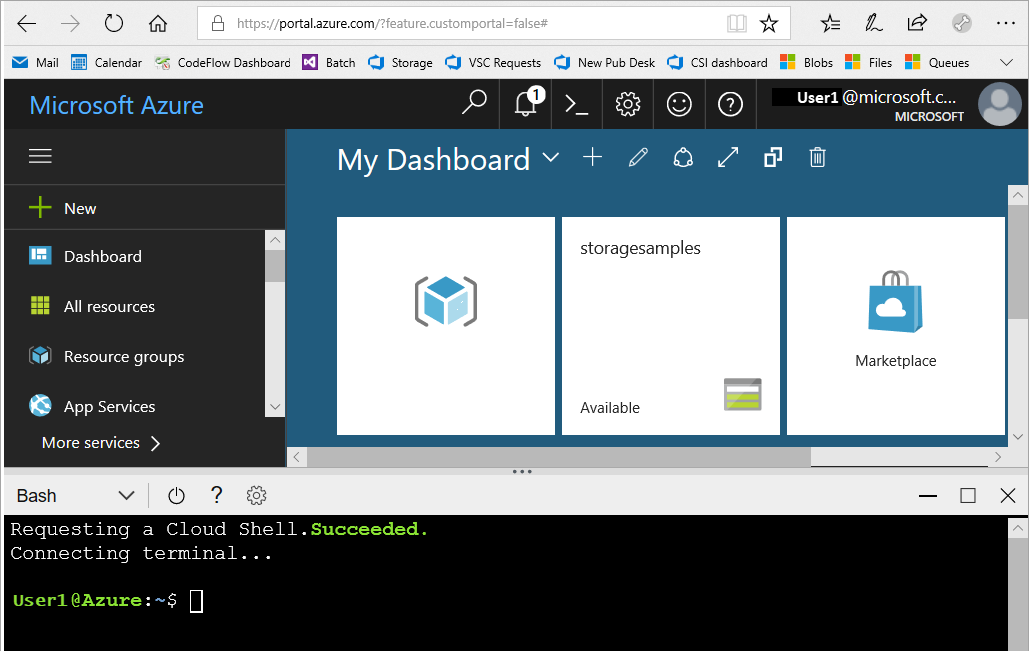
Next, sign in to Azure.
Sign in to the Azure portal.
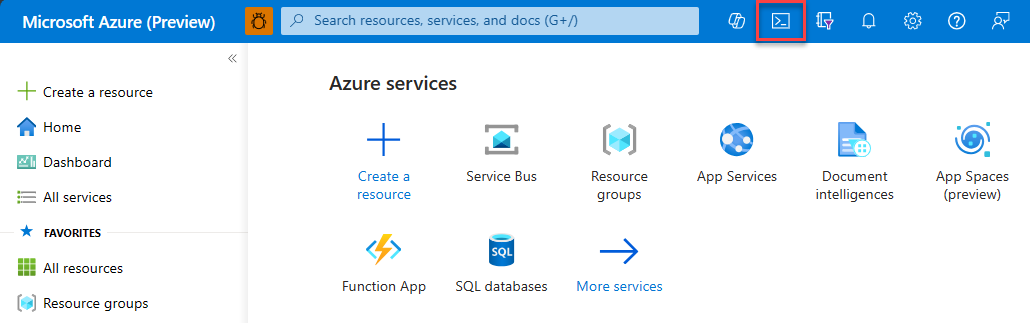
Create a storage account
A storage account is an Azure Resource Manager resource. Resource Manager is the deployment and management service for Azure. For more information, see Azure Resource Manager overview.
Every Resource Manager resource, including an Azure storage account, must belong to an Azure resource group. A resource group is a logical container for grouping your Azure services. When you create a storage account, you can either create a new resource group or use an existing resource group. This article shows how to create a new resource group.
Storage account type parameters
When you create a storage account by using PowerShell, the Azure CLI, Bicep, Azure Templates, or the Azure Developer CLI, specify the storage account type by using the kind parameter (for example, StorageV2). Specify the performance tier and redundancy configuration together by using the sku or SkuName parameter (for example, Standard_GRS). The following table shows which values to use for the kind parameter and the sku or SkuName parameter to create a particular type of storage account with the desired redundancy configuration.
| Type of storage account | Supported redundancy configurations | Supported values for the kind parameter | Supported values for the sku or SkuName parameter | Supports hierarchical namespace |
|---|---|---|---|---|
| Standard general-purpose v2 | LRS / GRS / RA-GRS / ZRS / GZRS / RA-GZRS | StorageV2 | Standard_LRS / Standard_GRS / Standard_RAGRS/ Standard_ZRS / Standard_GZRS / Standard_RAGZRS | Yes |
| Premium block blobs | LRS / ZRS | BlockBlobStorage | Premium_LRS / Premium_ZRS | Yes |
| Premium file shares | LRS / ZRS | FileStorage | Premium_LRS / Premium_ZRS | No |
| Premium page blobs | LRS | StorageV2 | Premium_LRS | No |
| Legacy standard general-purpose v1 | LRS / GRS / RA-GRS | Storage | Standard_LRS / Standard_GRS / Standard_RAGRS | No |
| Legacy blob storage | LRS / GRS / RA-GRS | BlobStorage | Standard_LRS / Standard_GRS / Standard_RAGRS | No |
To create an Azure storage account by using the Azure portal, follow these steps:
From the left portal menu, select Storage accounts to display a list of your storage accounts. If you don't see the portal menu, select the menu button to toggle it on.

On the Storage accounts page, select Create.


The Create a storage account page organizes options for your new storage account into tabs. The following image shows these tabs.

Basics tab
On the Basics tab, enter the essential information for your storage account. After you complete the Basics tab, you can choose to further customize your new storage account by setting options on the other tabs, or you can select Review + create to accept the default options and proceed to validate and create the account.
The following table describes the fields on the Basics tab.
| Section | Field | Required or optional | Description |
|---|---|---|---|
| Project details | Subscription | Required | Select the subscription for the new storage account. |
| Project details | Resource group | Required | Create a new resource group for this storage account, or select an existing one. For more information, see Resource groups. |
| Instance details | Storage account name | Required | Choose a unique name for your storage account. Storage account names must be between 3 and 24 characters in length and can contain only numbers and lowercase letters. |
| Instance details | Region | Required | Select the appropriate region for your storage account. For more information, see Regions and Availability Zones in Azure. Not all regions support all types of storage accounts or redundancy configurations. For more information, see Azure Storage redundancy. The choice of region can affect billing. For more information, see Storage account billing. |
| Instance details | Preferred storage type | Required | Preferred storage type allows Azure to provide relevant guidance in the account creation experience based on your selected storage type. Choose from four storage types: Blob storage or Azure Data Lake Storage (ADLS) Gen 2, Azure Files, Tables, and Queues. Choosing a preferred storage type doesn't limit you from using any other services inside the storage account. |
| Instance details | Performance | Required | Select Standard performance for general-purpose v2 storage accounts (default). This type of account is recommended by Microsoft for most scenarios. For more information, see Types of storage accounts. Select Premium for scenarios requiring low latency. After selecting Premium, select the type of premium storage account to create. The following types of premium storage accounts are available: |
| Instance details | Redundancy | Required | Select your desired redundancy configuration. Not all redundancy options are available for all types of storage accounts in all regions. For more information about redundancy configurations, see Azure Storage redundancy. If you select a geo-redundant configuration (GRS or GZRS), Azure replicates your data to a data center in a different region. For read access to data in the secondary region, select Make read access to data available in the event of regional unavailability. |
Advanced tab
On the Advanced tab, you can configure additional options and modify default settings for your new storage account. Some of these options you can configure after creating the storage account, while others require configuration at the time of creation.
The following table describes the fields on the Advanced tab.
| Section | Field | Required or optional | Description |
|---|---|---|---|
| Data Lake Storage | Enable hierarchical namespace | Optional | To use this storage account for Azure Data Lake Storage workloads, configure a hierarchical namespace. For more information, see Introduction to Azure Data Lake Storage. |
| Blob storage | Enable SFTP | Optional | Enable the use of Secure File Transfer Protocol (SFTP) to securely transfer data over the internet. For more information, see [Secure File Transfer (SFTP) protocol support in Azure Blob Storage](../blobs/secure-file-transfer-protocol-support. |
| Blob storage | Enable network file system (NFS) v3 | Optional | NFS v3 provides Linux file system compatibility at object storage scale and enables Linux clients to mount a container in Blob storage from an Azure Virtual Machine (VM) or a computer on-premises. For more information, see Network File System (NFS) 3.0 protocol support in Azure Blob Storage. |
| Blob storage | Allow cross-tenant replication | Required | By default, users with appropriate permissions can configure object replication across Microsoft Entra tenants. To prevent replication across tenants, deselect this option. For more information, see Prevent replication across Microsoft Entra tenants. |
| Blob storage | Access tier | Required | Blob access tiers enable you to store blob data in the most cost-effective manner, based on usage. Select the hot tier (default) for frequently accessed data. Select the cool tier for infrequently accessed data. For more information, see Hot, Cool, and Archive access tiers for blob data. |
| Azure Files | Enable Managed Identity for SMB | Optional | This setting enables secure, credential-free access to Azure SMB file shares by allowing authentication through Microsoft Entra ID instead of storage account keys. This approach strengthens security and eliminates the need for storage account key access for VM and application. See Access SMB Azure file shares by using managed identities with Microsoft Entra ID. |
| Azure Files | Require Encryption in Transit for SMB | Optional | This setting lets you independently control whether encryption is required for SMB access to Azure file shares in the storage account. This setting gives more granular control than the Require secure transfer setting. When Require Encryption in Transit for SMB is enabled on a storage account, the Require secure transfer setting applies only to REST/HTTPS traffic. |
Networking tab
On the Networking tab, you can configure network connectivity and routing preference settings for your new storage account. You can also configure these options after creating the storage account.
The following table describes the fields on the Networking tab.
| Field | Required or optional | Description |
|---|---|---|
| Public network access | Required | This setting specifies the default public network access rule. You can enable inbound traffic, block all traffic, or secure traffic by using a network security perimeter. If you choose to enable traffic, you can apply more granular control by using the options available in the Public network access scope section of this page. |
| Public network access scope | Required | If you enable public network access, you can enable inbound traffic from all networks or allow traffic only from specific virtual networks or IP address ranges. |
| Virtual network subscription | Optional | If you choose to enable inbound traffic only from specific virtual networks or IP address ranges, use this setting to specify the subscription of a virtual network to which you want to allow traffic. |
| Virtual network | Optional | If you choose to enable inbound traffic only from specific virtual networks or IP address ranges, use this setting to specify the name of a virtual network from which you want to allow traffic. |
| IPv4 Addresses | Optional | If you choose to enable inbound traffic only from specific virtual networks or IP address ranges, use this setting to select public internet IP addresses from which you want to allow traffic. |
| Private endpoint | Optional | Enables you to create a private endpoint which assigns a private IP address from your virtual network to your storage account. |
| Network routing | Required | The network routing preference specifies how network traffic is routed to the public endpoint of your storage account from clients over the internet. By default, a new storage account uses Microsoft network routing. You can also choose to route network traffic through the POP closest to the storage account, which might lower networking costs. For more information, see Network routing preference for Azure Storage. |
| Internet protocol | Optional | You can optionally enable the IPv6 protocol in addition to IPv4. IPv6 requires public endpoint access, and is currently incompatible with private endpoints and internet routing. |
Data protection tab
On the Data protection tab, you can configure data protection options for blob data in your new storage account. You can also configure these options after creating the storage account. For an overview of data protection options in Azure Storage, see Data protection overview.
The following table describes the fields on the Data protection tab.
| Section | Field | Required or optional | Description |
|---|---|---|---|
| Recovery | Enable point-in-time restore for containers | Optional | Point-in-time restore provides protection against accidental deletion or corruption by enabling you to restore block blob data to an earlier state. For more information, see Point-in-time restore for block blobs. Enabling point-in-time restore also enables blob versioning, blob soft delete, and blob change feed. These prerequisite features might have a cost impact. For more information, see Pricing and billing for point-in-time restore. |
| Recovery | Enable soft delete for blobs | Optional | Blob soft delete protects an individual blob, snapshot, or version from accidental deletes or overwrites by maintaining the deleted data in the system for a specified retention period. During the retention period, you can restore a soft-deleted object to its state at the time it was deleted. For more information, see Soft delete for blobs. Microsoft recommends enabling blob soft delete for your storage accounts and setting a minimum retention period of seven days. |
| Recovery | Enable soft delete for containers | Optional | Container soft delete protects a container and its contents from accidental deletes by maintaining the deleted data in the system for a specified retention period. During the retention period, you can restore a soft-deleted container to its state at the time it was deleted. For more information, see Soft delete for containers. Microsoft recommends enabling container soft delete for your storage accounts and setting a minimum retention period of seven days. |
| Recovery | Enable soft delete for file shares | Optional | Soft delete for file shares protects a file share and its contents from accidental deletes by maintaining the deleted data in the system for a specified retention period. During the retention period, you can restore a soft-deleted file share to its state at the time it was deleted. For more information, see Prevent accidental deletion of Azure file shares. Microsoft recommends enabling soft delete for file shares for Azure Files workloads and setting a minimum retention period of seven days. |
| Tracking | Enable versioning for blobs | Optional | Blob versioning automatically saves the state of a blob in a previous version when the blob is overwritten. For more information, see Blob versioning. Microsoft recommends enabling blob versioning for optimal data protection for the storage account. |
| Tracking | Enable blob change feed | Optional | The blob change feed provides transaction logs of all changes to all blobs in your storage account, as well as to their metadata. For more information, see Change feed support in Azure Blob Storage. |
| Access control | Enable version-level immutability support | Optional | Enable support for immutability policies that are scoped to the blob version. If you select this option, then after you create the storage account, you can configure a default time-based retention policy for the account or for the container, which blob versions within the account or container inherit by default. For more information, see Enable version-level immutability support on a storage account. |
Security tab
On the Security tab, you can configure options that relate to security.
The following table describes the fields on the Security tab.
| Section | Field | Required or optional | Description |
|---|---|---|---|
| Security | Require secure transfer for REST API operations | Optional | Require secure transfer to ensure that incoming requests to this storage account are made only via HTTPS (default). Recommended for optimal security. If neither Require Encryption in Transit for SMB or Require Encryption in Transit for NFS are selected in the Azure Files section of the Advanced tab, this setting applies to SMB and NFS for Azure Files as well as REST/HTTPS traffic. If you have clients that need access to unencrypted SMB (such as SMB 2.1), uncheck this checkbox. For more information, see Require secure transfer to ensure secure connections. |
| Security | Allow enabling anonymous access on individual containers | Optional | When enabled, this setting allows a user with the appropriate permissions to enable anonymous access to a container in the storage account (default). Disabling this setting prevents all anonymous access to the storage account. Microsoft recommends disabling this setting for optimal security. For more information, see Prevent anonymous read access to containers and blobs. Enabling anonymous access doesn't make blob data available for anonymous access unless the user takes the additional step to explicitly configure the container's anonymous access setting. |
| Security | Enable storage account key access | Optional | When enabled, this setting allows clients to authorize requests to the storage account by using either the account access keys or a Microsoft Entra account (default). Disabling this setting is more secure because it prevents authorization by using the account access keys. For more information, see Prevent Shared Key authorization for an Azure Storage account. |
| Security | Default to Microsoft Entra authorization in the Azure portal | Optional | When enabled, the Azure portal authorizes data operations by using the user's Microsoft Entra credentials by default. If the user doesn't have the appropriate permissions assigned via Azure role-based access control (Azure RBAC) to perform data operations, the portal uses the account access keys for data access instead. The user can also choose to switch to using the account access keys. For more information, see Default to Microsoft Entra authorization in the Azure portal. |
| Security | Minimum TLS version | Required | Select the minimum version of Transport Layer Security (TLS) for incoming requests to the storage account. The default value is TLS version 1.2. When set to the default value, incoming requests made by using TLS 1.0 or TLS 1.1 are rejected. For more information, see [Enforce a minimum required version of Transport Layer Security (TLS) for requests to a storage account](transport-layer-security-configure-minimum-version. |
| Security | Permitted scope for copy operations (preview) | Required | Select the scope of storage accounts from which data can be copied to the new account. The default value is From any storage account. When set to the default value, users with the appropriate permissions can copy data from any storage account to the new account.Select From storage accounts in the same Azure AD tenant to only allow copy operations from storage accounts within the same Microsoft Entra tenant.Select From storage accounts that have a private endpoint to the same virtual network to only allow copy operations from storage accounts with private endpoints on the same virtual network.For more information, see Restrict the source of copy operations to a storage account. |
| Microsoft Defender for Storage | Enable Defender for Storage | Optional | When enabled, your account activates an additional layer of security intelligence that detects unusual and potentially harmful attempts to access or exploit storage accounts. For more information, see What is Microsoft Defender for Cloud?. |
Encryption tab
On the Encryption tab, you can configure options that relate to how your data is encrypted when it's persisted to the cloud. Some of these options can be configured only when you create the storage account.
The following table describes the fields on the Encryption tab.
| Field | Required or optional | Description |
|---|---|---|
| Encryption type | Required | By default, data in the storage account is encrypted by using Microsoft-managed keys. You can rely on Microsoft-managed keys for the encryption of your data, or you can manage encryption by using your own keys. For more information, see Azure Storage encryption for data at rest. |
| Enable support for customer-managed keys | Required | By default, customer managed keys can be used to encrypt only blobs and files. Set this option to All service types (blobs, files, tables, and queues) to enable support for customer-managed keys for all services. You don't need to use customer-managed keys if you choose this option. For more information, see Customer-managed keys for Azure Storage encryption. |
| Encryption key | Required if Encryption type field is set to Customer-managed keys. | If you choose Select a key vault and key, you are presented with the option to navigate to the key vault and key that you wish to use. If you choose Enter key from URI, you're presented with a field to enter the key URI and the subscription. |
| User-assigned identity | Required if Encryption type field is set to Customer-managed keys. | If you're configuring customer-managed keys when creating the storage account, you must provide a user-assigned identity to use for authorizing access to the key vault. |
| Enable infrastructure encryption | Optional | By default, infrastructure encryption isn't enabled. Enable infrastructure encryption to encrypt your data at both the service level and the infrastructure level. For more information, see Create a storage account with infrastructure encryption enabled for double encryption of data. |
Tags tab
On the Tags tab, specify Resource Manager tags to help organize your Azure resources. For more information, see Tag resources, resource groups, and subscriptions for logical organization.
Review + create tab
When you go to the Review + create tab, Azure validates the storage account settings that you choose. If validation passes, you can create the storage account.
If validation fails, the portal indicates which settings you need to modify.
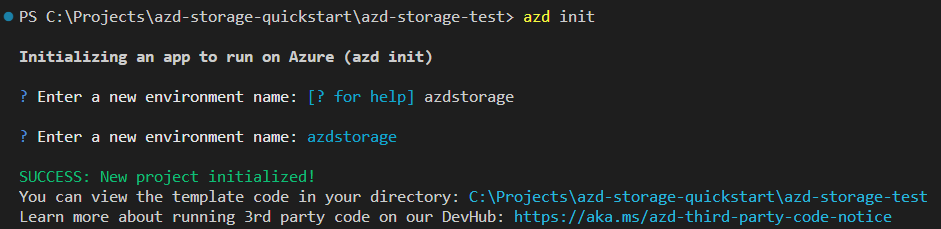
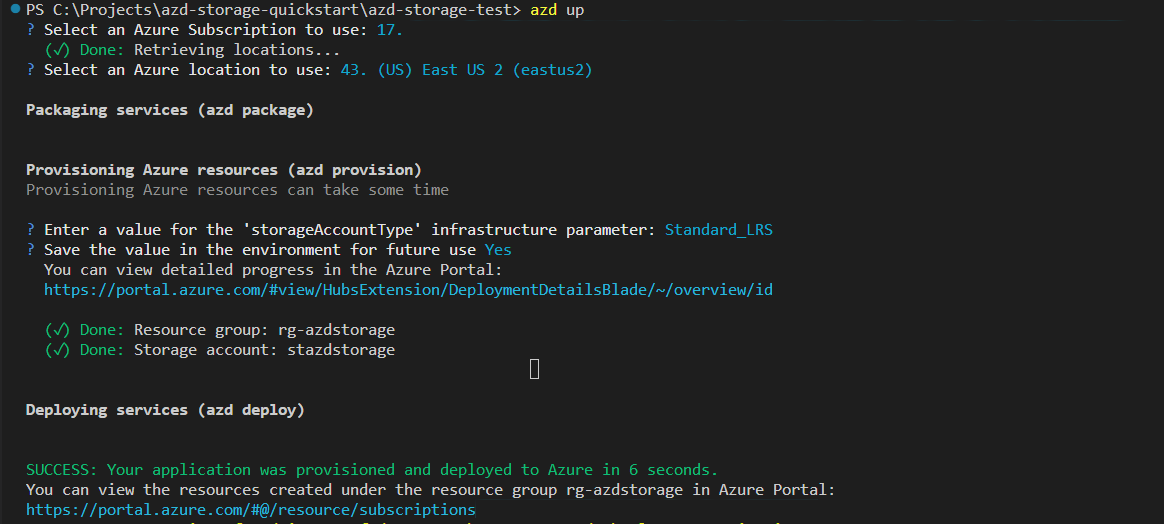
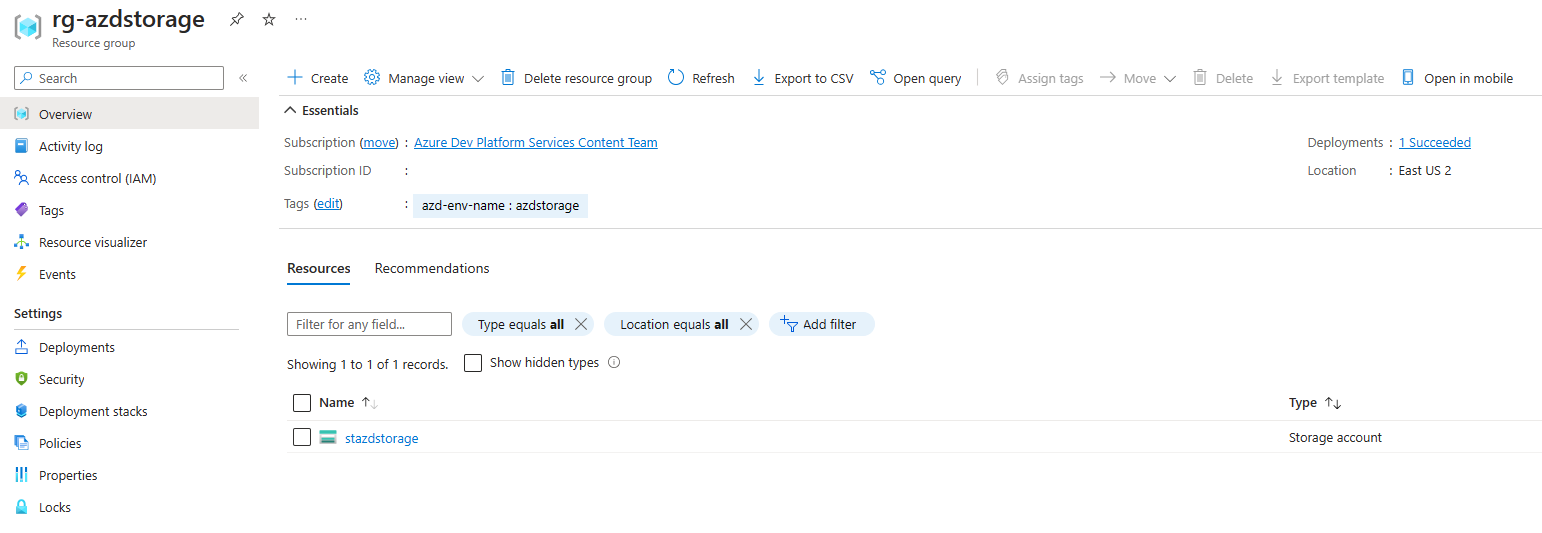
Delete a storage account
Deleting a storage account deletes the entire account, including all data in the account. Be sure to back up any data you want to save before you delete the account.
Under certain circumstances, you might be able to recover a deleted storage account, but recovery isn't guaranteed. For more information, see Recover a deleted storage account.
If you try to delete a storage account associated with an Azure virtual machine, you might get an error about the storage account still being in use. For help with troubleshooting this error, see Troubleshoot errors when you delete storage accounts.
- Go to the storage account in the Azure portal.
- Select Delete.
You can also delete the resource group. This action deletes the storage account and any other resources in that resource group. For more information about deleting a resource group, see Delete resource group and resources.